
Once upon a time, the prevailing belief was that the entire cosmos revolved around our planet. That made perfect sense based on the information that was available to people at the time, but of course it flies in the face of what we now know to be true. We can look back at these people and laugh, but we should keep in mind that if humans still exist about 5 centuries from now, they’ll probably be laughing at some of our current beliefs as well.
I find it rather comforting to know that our knowledge base continues to increase. The fact that there’s always more to learn is what makes life worth living. I don’t long for some great, fictional past. I hope for a greater future. But the fact that we can’t possibly have a clear picture of what the future looks like can be intimidating to some people. The fact that we now know so much that no individual can know everything that is known, and that we have forgotten some things we used to know and might very well benefit from, is also daunting.
In order to avail ourselves of the font of human knowledge, we have to employ increasing levels of trust in one another. That can be problematic in an era of false information. Now more than ever, it’s important to have critical thinking skills, but I fear that those skills are withering on the vine if they were ever nurtured in the first place. It’s so much easier, when hit with a torrent of new data, to blindly allow others to do the thinking for us. I implore you to resist that urge.
I’m not saying that you have to abandon faith in the unknowable if it gives you comfort. But you can have faith in multiple things simultaneously. The most logical thing to have faith in is the scientific method. We all have brains. We should use them. In simple terms, this method can be boiled down to this image:

Every step in this method makes perfect sense to me, so I’m stunned when people disparage it. I think the reason some people distrust science is that this method is often a never-ending spiral. We hear about various hypotheses, and if the scientific method proves them wrong, some will then assume that the scientists who made those hypotheses are therefore incompetent and should never gain our confidence.
On the contrary, finding out what’s wrong can be part of the method. It helps lead us to what is more likely to be right. We should be saying, “Yay! You’ve eliminated that possibility. We’re getting closer!”
Instead, some people use those eliminations to convince people to eschew science and instead believe in absurd things, like the concept that the earth is flat, despite all evidence to the contrary. Pity those people. Their critical thinking slip is showing. (And I am dying to know why they hold this belief when no one, not even astronauts, have ever encountered the earth’s “edge.”)
I have been thinking about all this because the other day I heard on NPR that scientists have found a ring-like structure in our universe, and it’s putting a lot of our previous theories, including our ideas about the origin of the universe, into question. I mean, the guiding principle in modern times is that all matter is spread smoothly across the universe. And now there’s this big ring, gumming up the works.
The first thing that rattled my cage about the Big Ring was the word “structure.” I have always thought of structures as solid, connected things. Buildings are structures. Bridges are structures. So I was picturing a solid ring like a bagel or something. But this particular “bagel” happens to be 1.3 billion light years across. That’s a lot of dough. Come on, now. How could we have overlooked that all this time?
Well, for starters, the definition of structure, according to Oxford English Dictionary, is, “the arrangement of and relations between the parts or elements of something complex,” so, based on that, a structure does not have to be connected per se. In fact, the ring in question is a strange grouping of galaxies and galaxy clusters. Regardless, we are befuddled by its existence.
Another cool thing is that this structure was discovered just this month by Alexia Lopez, a PhD student at the University of Central Lancashire. Woman power! Student power! And even better, this wasn’t her first find. She also discovered “The Giant Arc” back in 2021. That one spans 3.3 billion light years of space, and it’s relatively close to the Big Ring by astronomical standards.
Both of these structures are about 9.2 billion light years away from us, and they’re not visible to the naked eye. No wonder so many of us look at the night sky in awe. There’s so much out there.
I didn’t even know these structures were a thing until this month, so you can imagine my shock when I found a list of nearly 50 of them on Wikipedia alone. They might be walls, arcs, galaxy clusters, filaments or quasar groups. The largest one to date is called the Hercules-Corona Borealis Great Wall, and it’s nearly 10 billion light years across. Inconceivable.

Here’s the most beautiful one I found.
Since these things are so far away, though, it’s hard to really say how big they are. How do you decide what constitutes an element of a particular structure, and are we sure we’re seeing it all? For example, it is now thought that the Big Ring is actually corkscrew shaped, and that it’s aligned with earth in such a way that it appears to be a ring to us.
And then there are the large voids. Those are vast spaces that contain little or no galaxies. The largest one discovered to date is nearly 3 billion light years across. (If the Starship Enterprise had entered one of those, it would have made for some very boring episodes.)
I guess what I’m trying to say is that we know an overwhelming number of things, but what we don’t know is a lot. Isn’t that exciting, though? It’s okay to draw comfort from the familiar, but embrace change as well. Allow yourself to be open to surprise and fascination. Ask questions.
Think critically, but don’t have a knee-jerk reaction that causes you to reject the previously unthinkable. Your mind should be ever-expanding, just like the universe. (And by the way, this is my 3,600th post, so it seems that my blog is ever-expanding, too!)
And with that, I’ll leave you with this poem:
Changes Abound

Changes abound… around us, within us, between us;
in our communities, our neighborhoods, and our beloved faith communities.

Changes abound.

May we each find the balance point we need as we move through our ever-changing world:
the balance between the old and the new,
between the known and the unknown,
between the familiar and the perhaps bold and risky possibilities that may be there, waiting.

- by Michelle Collins
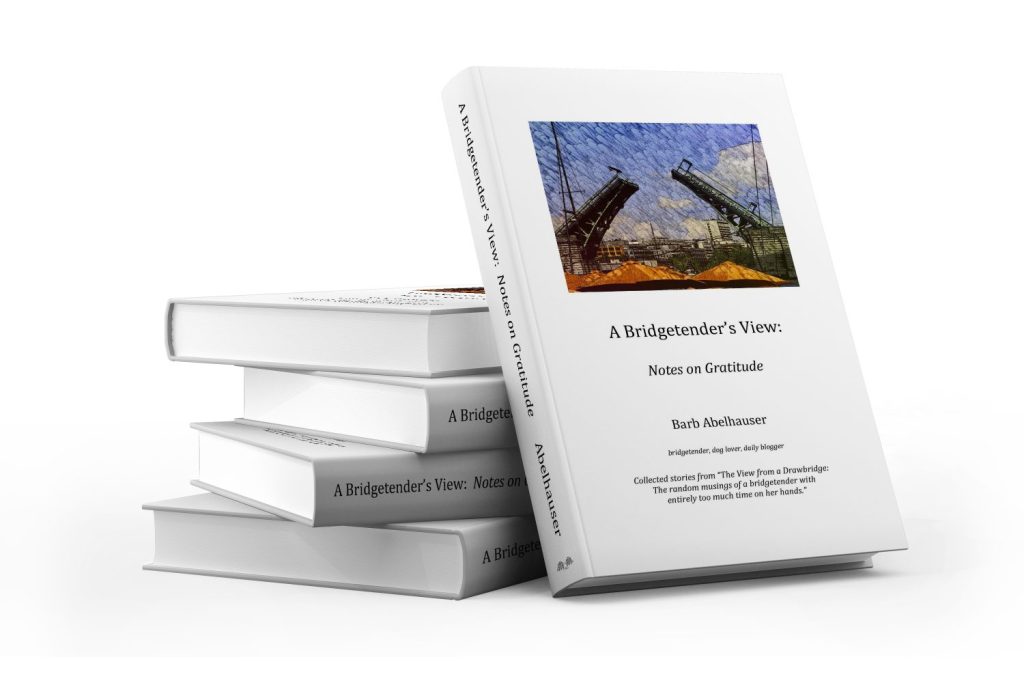
If this little blog has broadened your horizons, check out my book! http://amzn.to/2mlPVh5


Leave a Reply