
Dear Reader, you know how much I love to shine a light on obscure tidbits of information. Because of this, I feel compelled to tell you that today is a national holiday. Happy For Pete’s Sake Day!
It seems that there is a national holiday for just about everything. But this one, in particular, amused me, because I’m not sure whether to celebrate it or boycott it. Either way, this unique holiday was created so that we could recognize minced oaths.
And perhaps minced oaths deserve a little recognition. I had never heard that phrase before doing research for this article. Basically, a minced oath is a word or phrase that is used as a substitute for a more offensive or blasphemous intensifier. Because, good golly, sometimes you just have to say something.
If you stub your toe in polite company, the general consensus seems to be that a good minced oath can come in handy. It’s also an excellent resource when you are shocked or surprised. And heck, sometimes you just need to vent.
The reason I have mixed emotions about minced oaths is that even in this day and age, we often employ this form of self-censorship as a way to avoid societal censorship. And I loathe censorship in all its many forms.
We writers have to worry that if our language becomes too spicy, it will not be allowed in libraries or schools or whatever other venues we are targeting in order to spread our words. Even using “offensive” language out loud can cause people to be shunned in certain circles. I find this extremely frustrating.
Before we get too far into the weeds, I want to say that I’m not talking about name-calling. I agree that there’s really no place for that. But expletives are not directed at anyone in particular. They are not meant as insults. They are a means of expression. And in that context, as far as I’m concerned, there should be no such thing as an offensive word.
Words are words. They are distinct units of language. Nothing more, nothing less. In and of themselves, they should possess no positive or negative charge. Any emotional context, any offense, is something we humans choose to enshroud words in. And who gets to decide what’s a good word and what’s a bad word? It all seems quite arbitrary, based on location, decade, venue, audience, fad, and sensitivity.
By contrast, emotions are the main ingredient of insults. Their goal is to disrespect or offend. That’s a different thing entirely. For example, calling someone a b**ch, in my opinion, is emotionally charged and loaded with evil intent, so I tend to avoid it. On the other hand, if I accidentally hit my thumb with a hammer, I see no reason why I can’t shout, to the very rafters, “son of a b**ch!” In times like those, word choice can be the spoonful of sugar that helps the medicine go down. Shouting “son of a sea cook!” as my mother might have done, just doesn’t seem as satisfying to me.
Often, minced oaths have been created to avoid offending religious people. We say gosh and golly to avoid saying god, and heck instead of hell, and gee and geez and crikey and criminy instead of Jesus or christ. Making these substitutions can be construed as a sign of respect, but that overlooks the fact that the substitution still makes the listener think of the word that you are avoiding. So in essence, what you’re saying is, “See? I’m a good person, but gosh dang it (and you know exactly what I mean), that hurt!”
I applaud people who find a moral compass and stick to it. But the instinct to then force everyone around you to adhere to your chosen path is a bit much. (I used to have a coworker who hated the word toilet, and insisted we only use the word commode. So I put the word toilet in my repair requests every chance I got.)
If you don’t like what you’re hearing or reading, then leave the room or stop reading. Do your own individual censoring without forcing everyone else to have to do the heavy lifting. Limiting your vocabulary does not give you the moral high ground.
I once checked out a library book in which someone had covered all the words they found unacceptable with whiteout. That’s not okay. You’re not the author. You don’t have to read what the author wrote. And you definitely don’t have the right to choose what I read.
The reason cable TV networks can get away with more profanity than commercially broadcast television networks is that they are subscription services. In other words, you are choosing to be a viewer, whereas anyone, in theory, can stumble upon CBS, NBC, etc. So the profanity rules on those stations are more strict, and often, in my opinion, absurdly arbitrary. For example, you can say a$$, and you can say hole, but under no circumstances are you allowed to say a$$hole. Isn’t that ridiculous?
So, happy For Pete’s Sake Day, Dear Reader. Please take care if you choose to celebrate it, because some people, believe it or not, are even offended by the phrase “for Pete’s sake”. And while there are several theories as to how that phrase came about, no one can be absolutely sure who Pete is, and why we do so many things for his sake in the first place. And I’m not even freakin’ kidding about that.

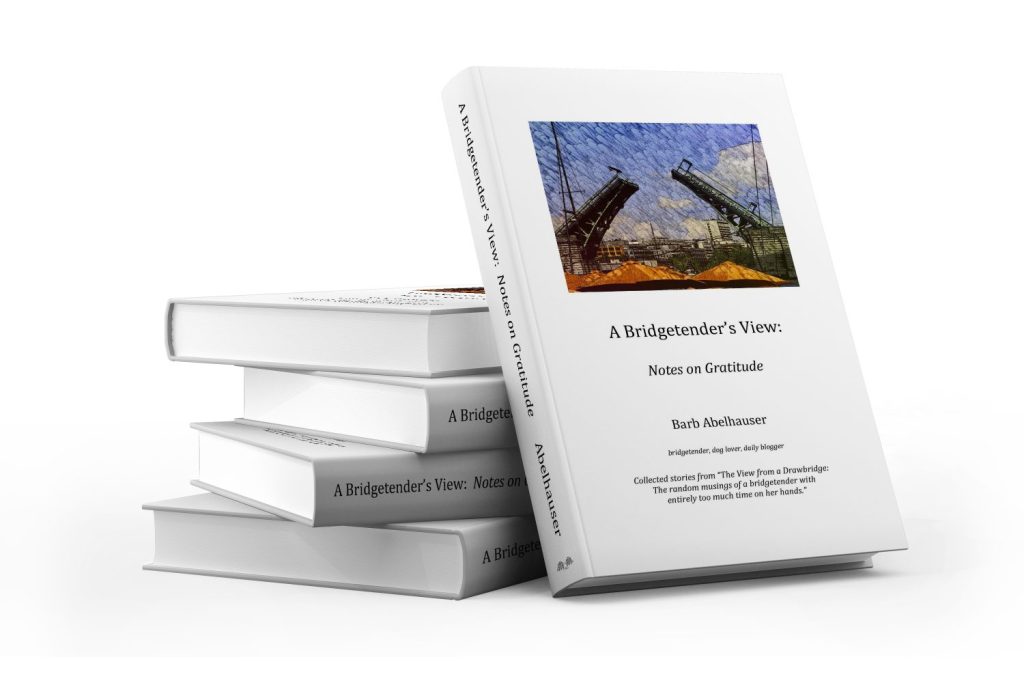
Like this quirky little blog? Then you’ll enjoy my book! http://amzn.to/2mlPVh5
Leave a Reply