
If it were possible for me to visit every archeological site on the face of the earth without risking life, limb, and bank account, I’d be thrilled to do so. Since archeology is such a passion of mine, computer algorithms have plotted against me by presenting me with more and more articles on the subject. I say “plotted” because the end result of reading these articles seems to be that I become overwhelmed and saddened by the fact that there is so much to see in this world and so little time for me to see it.
But learning about new sites is thrilling as well. It allows me to imagine what ancient people’s lives were like, and what their motivations and beliefs were. Generally speaking, I don’t thrive on unanswered questions, so you’d think I’d avoid such speculations, but it’s a bit like time travel mixed with imagination, fueled by remnants left behind by people I wish I could have known.
So when I stumbled upon an article entitled The Mystery Of The Stone Spheres Of Costa Rica, I was intrigued. That led me, in turn, to Wikipedia, Atlas Obscura, Heritage Daily, and a fascinating article on the Wayback Machine. (God, but I adore the internet despite its algorithms!)
Since it is my wont to cherry pick the most fascinating tidbits from the research that I do, I’ll just start off by hitting you with a few bullet points.
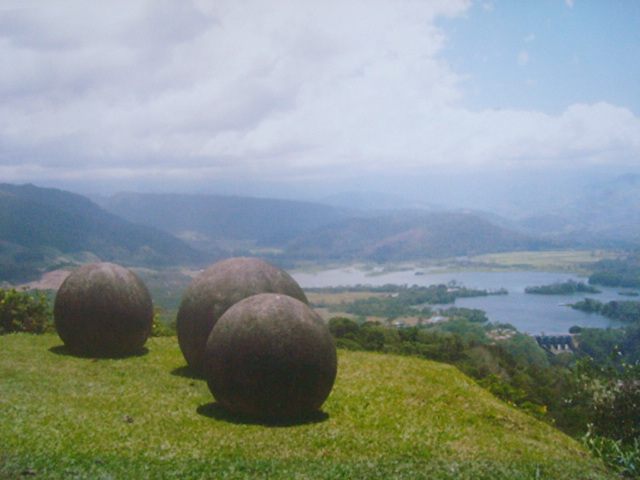
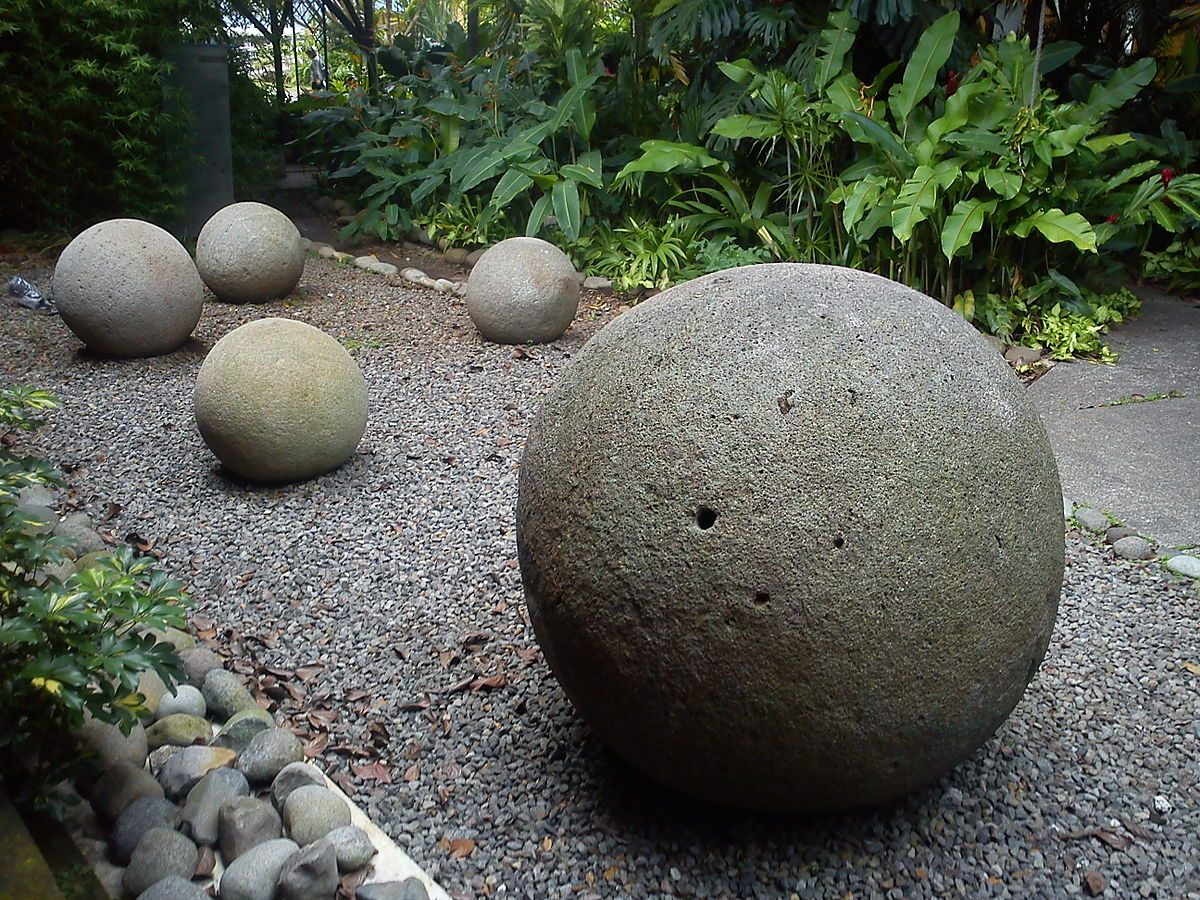
- There are at least 300 stone spheres scattered throughout Costa Rica.
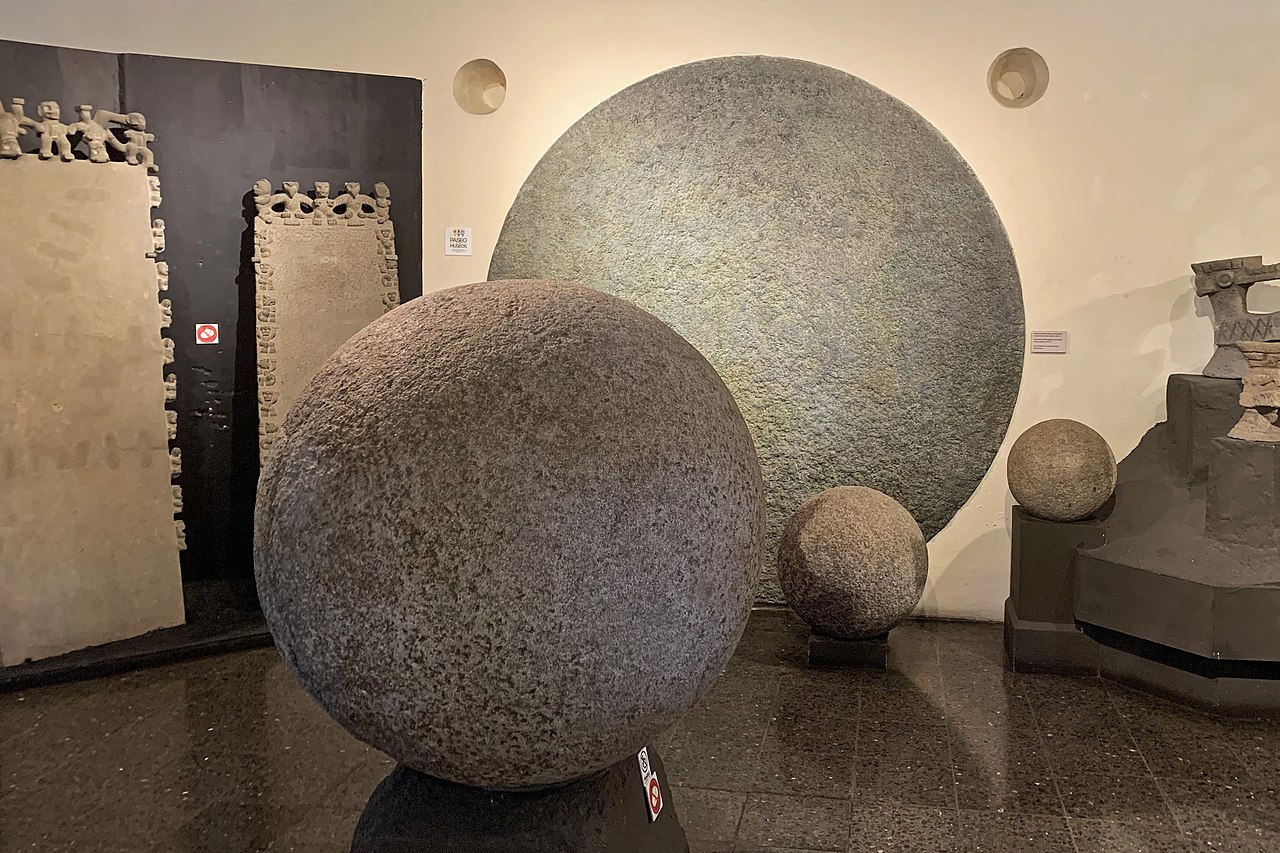
- A few are about an inch across, and the largest one is approximately 6 and a half feet in diameter and weighs more than 15 tons. All the rest are somewhere in between.
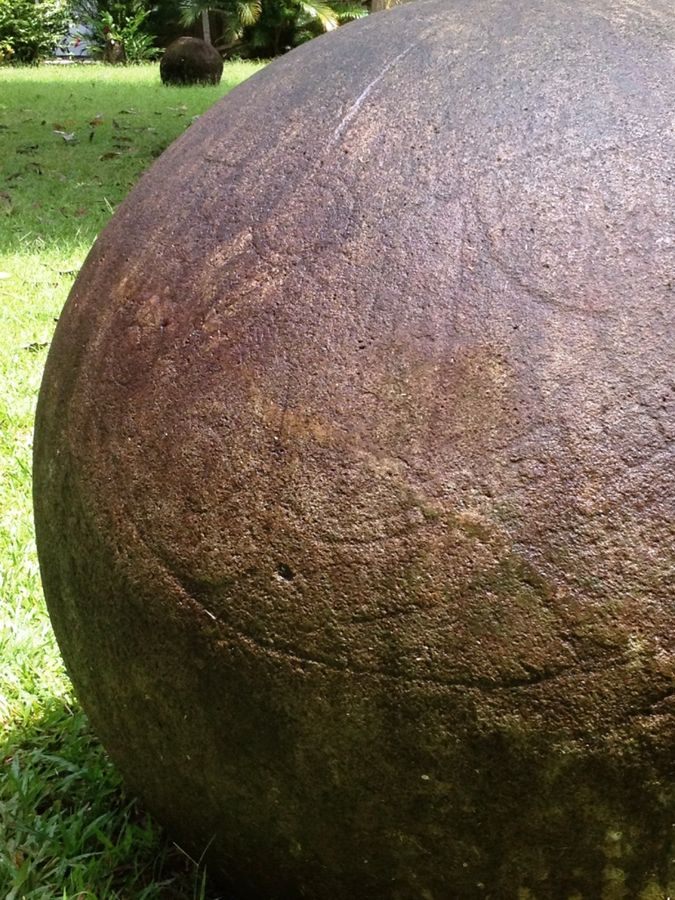
- Many of them are near perfect spheres, while others are much more rudimentary.
- As per usual in ancient cultures, the massive uncut stones were transported from other parts of the country, we know not how.
- They are believed to have been created by the Diquís people, who, having created a very complex society, lived in the area from around 1500 BC to 1500 AD.
- The Diquís abruptly disappeared after that. The most reasonable explanation for that disappearance is that they were wiped out by European diseases.
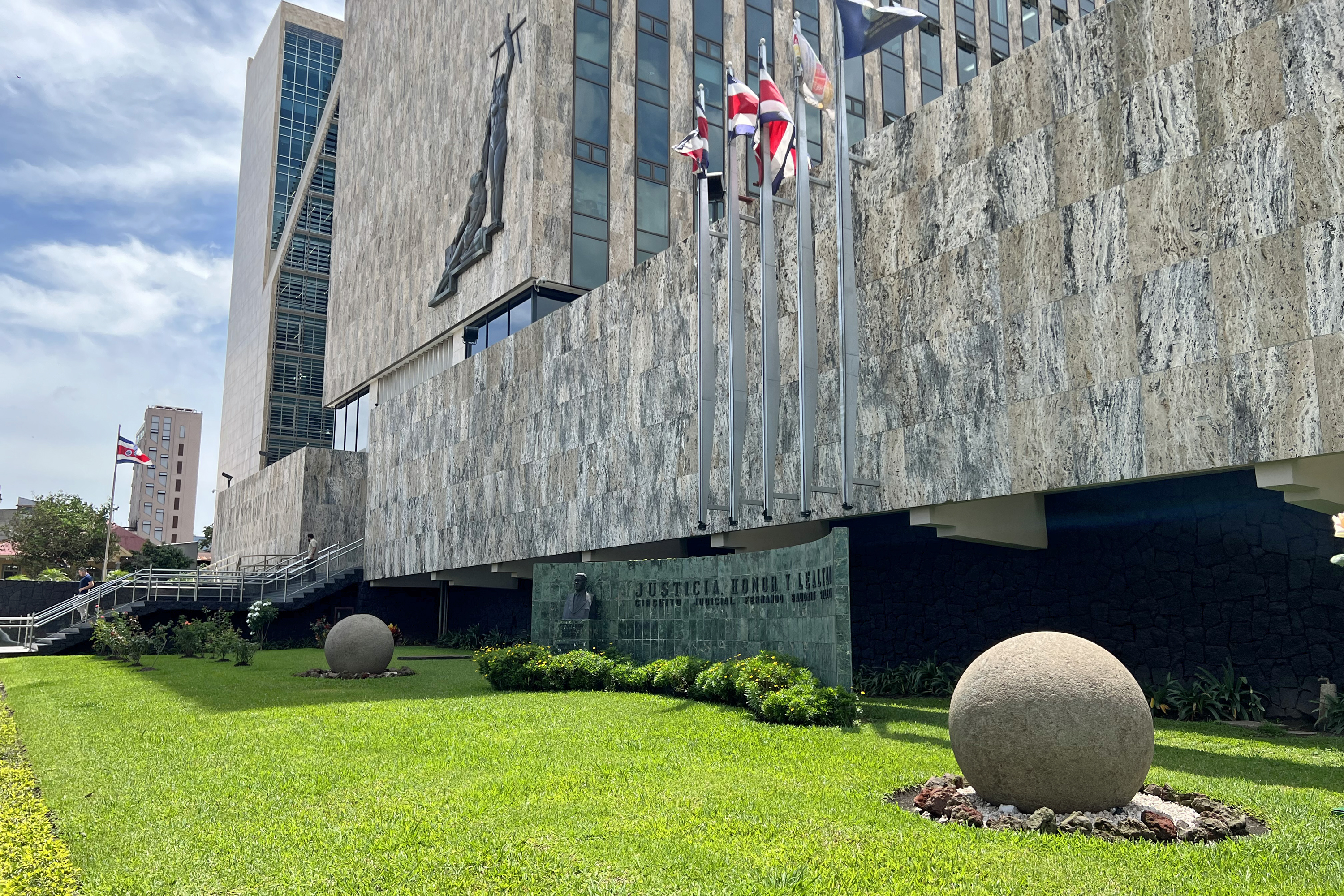
After that ubiquitous colonial genocide, however intentional or unintentional it may have been, these spheres were lost in the undergrowth and not seen again until the 1940’s, when United Fruit Company was clearing the jungle for banana plantations. Many of these spheres were simply pushed to the side by heavy equipment in order to make way for agricultural “progress.”
Due to rumors that they might be hiding gold, workmen drilled holes in some of them, filled those holes with dynamite, and blew them to smithereens. (People suck.) No gold was found, of course. How do you hide something inside solid rock without any sign of entry?
No one can be sure what these spheres were used for, or what they symbolized. There are several theories, but since a shocking number were simply pushed out of the way, or were appropriated by the Costa Rican upper class to serve as lawn ornaments and status symbols, or moved to museums or governmental plazas, it’s hard to know their original context.
Some people believe these orbs lined the pathways to the houses of chiefs. Others think they were astronomical tools. As some of the spheres were found in burial mounds, they might also have been some form of wealth. It’s also possible that they held some religious or magical meaning for the Diquís. I’m sure that people residing out on the lunatic fringe believe they were brought here by aliens. (Sigh.)
The theory that I personally like the most is described in that article from the Wayback Machine that I mention above. Since some of these balls still hold traces of whitewash, and since spheres by their very nature can’t be knocked over, they may have been route markers. Circles are not natural shapes in the jungle, and, painted white, they would have stood out. The ones that were somehow placed on top of high mounds would have been visible from a distance, too.
Whatever the Diquís spheres were, they must have been important, or people would not have spent so much time making them rather than engaging in the equally labor intensive and never-ending effort to survive. It appears that many of the orbs that were found in clusters were added to over centuries, which means there was some sort of generational dedication to the task.
I hope someday that I get to see some of these orbs for myself. If so, I’ll be imagining the people who made them, and creating stories in my head about what their lives were like. Did they dream of the future? Did they try to imagine me just as I’m trying to imagine them? What long-forgotten wisdom could they share with us?
If only these spheres could speak.
Travel vicariously through this blog. And while you’re at it, check out my book! http://amzn.to/2mlPVh5



Leave a Reply