
Let me start with some personal history.
One of my earliest memories is holding my mother’s hand and walking into this room full of adults who were being strangely quiet. Then we walked into a place barely bigger than a phone booth, and we closed a mustard-yellow curtain behind us. The big metal curtain rings made a scraping sound along the curtain rod. It was a jarring break in the silence.
I remember asking my mother why we needed a curtain, and she said it was so no one else could see what we were doing. The idea of secrecy gave me butterflies in my stomach. I don’t think I had ever done anything in secret before.
The curtain didn’t go all the way down to the floor, so for some reason I became very self-conscious about our legs, even though it was cold out and my mother was most likely wearing pants, and I was undoubtedly in my OshKosh B’gosh overalls and a pair of Keds. (That was my standard uniform back then.) But how could we be doing secret things if everyone could see our legs?
On one wall of the booth was a mysterious panel with a bunch of toggles and labels. It was like nothing I had ever seen before. My mother told me that it was really important that I not touch anything. She flipped some toggles and didn’t flip others. She knew what she was doing. This was even more complicated than driving a car, I thought. I was really impressed.

It was 1968, and I was just about to turn 4 years old. (God, I hope she didn’t vote for Nixon.) I wish I could recall exactly how my mother explained voting to me on that day. I do remember what I took away from that lesson, though. Voting was important. It was exciting. It was something one should take pride in. And because of that, when I grew old enough to vote, I never missed a single election, even if it was only for the town dog catcher.
Now, let’s throw in some political context.
I can certainly understand why voting in 1968 was such a big deal to my mother. Women here in America had only been given the right to vote in 1920, 7 years before my mother was born, when the 19th amendment was ratified. But it had taken 72 years of activism in the form of Women’s Suffrage to get to that point. 72 years of fighting and torture and dying. And even after the 19th amendment, a large slice of the population was still disenfranchised.
These people couldn’t make it past the poll tax, the literacy tests, and all the other nefarious hurdles that were meant to take power away from the average citizen. The 24th amendment was only ratified in 1964, the year I was born. It eliminated the poll tax, and therefore allowed America’s poor to vote. One year later, in 1965, 3 short years before we walked into that mysterious voting booth, the Voting Rights Act was passed, which eliminated the Jim Crow Laws.
Before that, people had been lynched for trying to vote. Voter fraud was rampant. (Not the modern kind, where votes are considered fraudulent when someone doesn’t like the outcome of the election and throws a tantrum that incites the an insurrection. No. I mean actual fraud.)
Not that the passing of major legislation actually makes America get its act together. Someone was lynched as recently as 1981, when I was still in high school. And to this day, people are attempting to restrict voting in one way or another in more than half of the 50 states. They aren’t even trying to hide their efforts. Gaining power is too important to them to waste time being clandestine. That alone should tell you that voting is important.
Now, with that added perspective, here’s why all women should vote.
The struggle for voting rights has been long, hard, and horrific. For the purposes of this post, though, I’ll focus on what women went through. In the mid 1800’s, women speaking out for equal rights seemed shocking. These women risked their lives, their jobs, their marriages, and even custody of their children. And yet, they persisted, decade after decade. It must have been very hard not to lose hope, but it was too important to give up.
The pressure to give women the vote reached the boiling point during the First World War. For the first time ever, women were doing jobs that had previously only been done by men. Many women also served on the front lines of the war.
Finally, more women were realizing that the drumbeat that had been pounded into their heads for their entire lives wasn’t true. They now knew from experience that they were not weaker and less capable than men. They were quite able to comprehend politics. They had a right to be taken seriously, and their voices should be heard.
Women supporting the suffrage movement were among the first people to ever form picket lines in America. President Wilson had to learn the hard way that these peaceful protests were effective, and that retaliation was absolutely not the way to combat this dissent. The optics were horrible.
Many suffragists were attacked by the men returning home from the war. Boys were encouraged to spit on these women. Their banners were often ripped from their hands and torn to shreds. The women quietly replaced them with new ones. They stood in silence and with dignity. As the protests gained momentum, men were throwing women to the ground while the police looked on and laughed.


Women, young and very old, were hauled off in paddy wagons. At first they were almost immediately released because the police could not figure out what to charge them with. Over time, they came up with ridiculous charges, such as obstructing traffic. Some women went to jail dozens of times. There, they were sometimes beaten, and always left in nightmarish conditions. I wonder if the fact that their food was usually full of worms is what inspired them to begin their hunger strikes.

As more and more women refused to eat, they were often force fed. The women would be held down, and tubes would be shoved into their noses, down their throats and at least partway down to their stomachs, and then food would be poured in as they struggled to breathe. This was a torture no less vile than waterboarding. Blood would flow from their noses and mouths, and they often could not speak well for weeks afterward. Every time this procedure was performed, there was a possibility that the woman would die by suffocating, or aspirating, or sustaining irreparable internal damage.
And yet upon release, most of these women would return to the picket lines, knowing full well that they would wind up in jail yet again. Such was their commitment to the cause. They understood the importance of the things that we all now take for granted and shamefully neglect.
The reason your vote is so important is that many elections are won by razor-thin margins. Every vote counts. And it counts even more in local elections, when most people don’t bother to show up at the polls.
Your vote holds elected officials accountable. Your vote shapes policies that have a direct impact on your life. Your vote determines how your tax money will be spent. Your vote will shape the future course of the country and the world in which you live. Your vote could very well ensure the survival of future generations.
I’m proud to say that, here in America at least, women always turn out in greater numbers to vote than men do. In 2020, 82 percent of us voted, compared to men’s 72 percent. Can you imagine what would happen if 100 percent of all women showed up? We’d rule the world! Sadly, only 64 percent of us participate in non-presidential elections, where we can have an even greater impact.
When I think of all the women who can’t be bothered to vote, I feel disgust for them. I used to have a coworker who would brag that she had never voted, and never would. (She used to say she wanted to get out of this country and move to Australia. I hope she did. Voting is compulsory in Australia.)
Women died so you could vote. They fought for you. Can’t you take a little time out of your day to exercise the right that was so hard-won by those who came before us? Don’t we owe them that respect? Don’t we owe ourselves that respect? We stand on the shoulders of these women who fought, sacrificed, suffered and even died to give us this right that we so often consider to be an inconvenient disruption of our daily routine.
The suffrage battle had to be fought in every country in the world. Today, women are legally allowed to vote just about everywhere except Vatican City, but even so, woman are prevented from voting through intimidation, misinformation, cultural norms, gerrymandering and voting restrictions in much of the world. That, above all, is why every woman should vote if they can. We have to speak for all the women who can’t speak for themselves.
Whenever I vote, I think of that day that I entered that voting booth for the first time, holding my mother’s hand. I’m proud to carry on her legacy. I’m grateful that she made me understand what voting really means.
But I also think of Emily Davison. She was an activist in England, and she’s my hero. She was arrested 9 times, went on a hunger strike 7 times, and was force-fed 49 times. In 1913, she made the ultimate sacrifice. Bearing two suffragette flags, and without telling anyone her plans, she headed to the Epsom Derby, and as the horses rounded the last bend, she stepped out onto the track just as King George V’s horse approached.
The horse mowed her down. She lived for 2 more days, receiving hate mail all the while. She never regained consciousness. She ultimately died from a fracture at the base of her skull. She was 40 years old. The whole scene was caught on newsreel cameras. You can see it below.
Every time I vote, this footage runs through my head. As tragic as it is, I hope it will now run through your head, too. Voting is a right worth dying for. In light of that fact, any woman who does not vote, regardless of her political point of view, should feel profound shame.
Please vote, dear reader. Please. And for all the women out there, your one vote is for you and for the millions of women who never had that privilege, honor, and luxury. By voting, you are saying, “We have a right to be heard.” That right was very hard-won.
Sources:
- The True History of Suffragette
- Wikipedia: Women’s Suffrage
- Wikipedia: Emily Davison
- Radical Protests Propelled the Suffrage Movement. Here’s How a New Museum Captures That History
- Gender Differences in Voter Turnout
- Why Voting Is Important
- Wikipedia: Jim Crow Laws
- Map: See Which States Have Restricted Voter Access, And Which States Have Expanded It
- Did the First World War transform women’s lives?
- Countries Where Women Cannot Vote 2024
- A life-changing habit: Five reasons why you should vote in every election
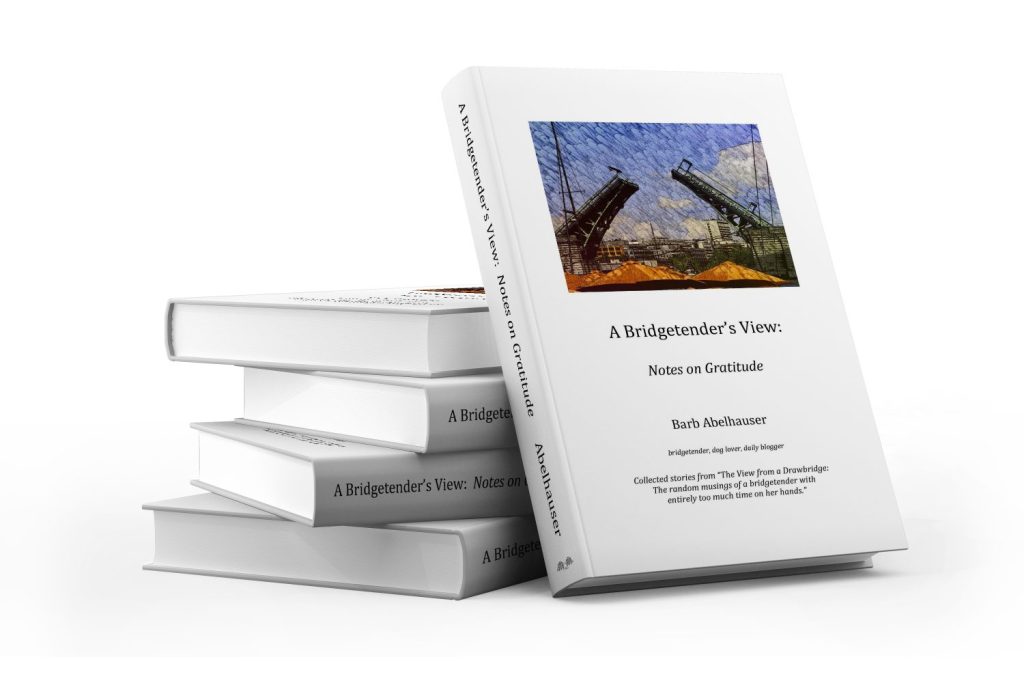
If this little blog has broadened your horizons, check out my book! http://amzn.to/2mlPVh5


Leave a Reply