
This article contains many website recommendations. I am not profiting from them. They are genuinely my favorite sites to use. Where you go on the web is entirely up to you, of course.
Travel is my jam. It’s what I live for. Going places you’ve never been is the most exciting thing anyone can do, in my opinion.
Over the years, I’ve taken many a trip. I’ve made a lot of travel mistakes, and have created solutions for said mistakes. I’m convinced that the best way to have a great vacation and come home with no regrets is to do your homework beforehand. So what follows is a step by step list of how I plan my vacations. (And be grateful for the internet, dear reader, because it makes planning so much easier than it once was. No need for a trip to the public library for you!)
Let’s start with the tedious bit. Getting there.
If you’re planning to travel internationally, your first stop on the internet should be the U.S. Government Department of State Travel Advisory page. These advisories are kept up to date by all the U.S. Consulates throughout the world. Part of your destination might be experiencing unrest at the moment, or suffering through an extremely high crime wave, or you might be headed into dangerous weather conditions. If the place is on fire, literally or figuratively, you might not want to go there. Many countries are perfectly fine to travel to, but one tiny corner may be dangerous and worth avoiding. You should take this information into account before choosing your destination.
Unless you’ll be taking an all-inclusive tour or cruise, you’ll need to choose your flights, lodging, and possibly a car rental. If you have a Costco membership, I highly recommend that you check the Costco Travel website first. As Dear Husband likes to say, they often have screamin’ deals.
Of course, as with medical advice, it never hurts to get a second opinion. My favorite website for this is Kayak.com. At the risk of sounding like a commercial, it compares prices from hundreds of sites (but not exclusive sites like Costco) so you can get the best deal possible. And keep in mind that if you have some flexibility in your schedule, a one day difference in your travel dates might save you hundreds.
I also like to read up on unique lodging in the area and check out Airbnb and Vrbo as well as area hotels. If you are okay with hostels they can be your best bet. I love hostels. I don’t mind sharing a bathroom, as long as I have my own room, and more and more hostels have that option. I’m not traveling for the hotel room. That’s just the place where I’ll sleep so that I can explore the area. Just make sure you will be staying in a safe neighborhood.
Before booking any of the above, check out refund policies. If you book a rental car and there’s no penalty for cancelling, you can then check the website every week or so prior to your departure to see if prices have gone down in the interim and then make the switch. Dear Husband taught me this, and we’ve saved a fortune that way.
Now for the fun part: planning all the exciting things you’ll do.
First, let other people do the heavy lifting for you. Let’s say you want to go to Rome. In the weeks or months prior to your trip, ask everyone you come across if they’ve been to Rome, and if so, what was their favorite experience? What is the one thing they’d recommend doing above all others? What’s the one thing they wish they had done?
Also, order a current guidebook. My favorites are Rick Steves, Lonely Planet, and Fodor’s. Read the one you choose in advance. They’ll often give you tips and tricks to make your vacation flow more smoothly.
Two of the best ways to add another layer of detail to your travel experience is through reading books and taking language lessons. If you enjoy reading, it’s fun to read historical, travelogues, or even fictional books that take place in your destination, or ones written by someone from your destination. And if you have enough lead time prior to your trip, it’s fun to learn the basics of the language. We’ve often listened to Basic Italian CDs while driving around our hometown. At the very least, learn how to say please, thank you, excuse me, where is the bathroom, and how much does this cost. Those types of phrases are often included in guidebooks.
Next, Google “the best things to do in Rome.” A hundred articles will pop up. Pick maybe 3 to read. Then Google something like, “Rome’s best kept secrets,” or “unusual things to do in Rome.” Also look up “Events Calendar Rome,” because a really cool festival, concert, play or sporting event could be happening during your travel dates that you don’t want to miss. And then visit the site Atlas Obscura. That website will often mention quirky things that your average guidebook or list maker will overlook. (I do love quirky things.) Another fun thing to do is check out the “Experiences” section of the AirBnB website. You see a lot of tours offered by locals. If they sound interesting, and the person has gotten a lot of good reviews, go for it! There’s nothing quite like getting expertise from someone who lives in the city itself.
Once you’ve gathered all this information, make two lists. First, a list of everything you absolutely can’t miss doing, based on your interests. (And unless you’re traveling alone, don’t forget to take your travel companion’s interests into account, too!) Second, a list of things you’d also like to do if there’s time. Remember, you can’t do everything. There’s never enough time to do everything. A desperate sprint from one venue to another does not make for a good holiday.
Now you have a rough and dirty list. At this point I like to make a spreadsheet. (I use Microsoft Excel for this, but you do you.)
For every item on your list, visit their website. You want to find out what hours and days they will be open. (There’s nothing worse than looking forward to doing something on your very last day of travel, only to find out that it’s closed.) You also want to get a general idea of where these places are located, so that later you can group things together that are in the same neighborhood. Your feet will thank you. And make a note of whether or not reservations or advanced tickets are required, but don’t make the actual reservations just yet. If you are on a tight budget, also make note of the cost of admission.
And check to see if the city has some sort of city pass that offers discounts, but don’t automatically assume that means it will be worth it. Check the fine print and do the math. If it offers a lot of venues that you won’t be going to, and you add up all the admissions prices of the others, it may not be a savings. (Many people have that complaint about Rome’s city pass.)
Next, divide the venues into groups according to your needs. You can divide them by location, or, if you’re going somewhere with unpredictable weather, you might want to group the outdoor things for sunny weather and the indoor things for inclement weather, or avoid doing the strenuous things during the hottest part of the day. Or, if you’ll have access to a vehicle, group the locations that are within walking distance, then the ones that are easily accessed by public transportation, and, finally, the ones that will be much less of a hassle to go to by car.
Now that you have things grouped logically, you should determine, based on your energy levels and the pace you’d like to take, how many of these things can reasonably fit into your typical travel day. A great website to find out how much time the average person spends at a particular venue is Trip Advisor. But realize that if something is of great interest to you, you may want to linger longer. This is your vacation, after all.
Remember to allow time for meals. If someone has recommended a lunchtime restaurant that you definitely want to experience, and it will be near a place that you’ll be visiting, arrange to leave there at noon, for example, and add this restaurant into that group. (And make sure the restaurant won’t be closed that particular day.)
Next, organize the events into days. But this is very important: Do not choose which days you’ll do these things quite yet. Just think of the days as units that can be shuffled around later in your planning. Once you’ve got a day/unit filled with logically grouped venues, make a note related to when these places will be open. If Museum A is closed on Mondays, you need to know that this day/unit can’t be placed on a Monday. If Art Gallery B opens earlier than any other thing you have planned for this day/unit, then make that your first stop.
But beware. another thing that will complicate your scheduling is the fact that more and more venues require reservations. Just because you want to see the Pantheon on Tuesday at 9am, does not mean that there will be a slot available. So get ready to do some juggling. And make reservations as far ahead as you can for popular sites in tourist destinations. If you can avoid locking yourself in, though, do so. The most current Rick Steves guidebook for Italy tells you which places you really need to reserve unless you want to wait in a 4 hour line, and which are fairly easy to get into. The reserved places are like boulders in your schedule, and all your other plans are the river waters that are forced to flow around them. So try to avoid boulders if possible, with the understanding that sometimes you just have to have boulders.
Because I greatly prefer to spend my time and energy doing research before I take a trip rather than wasting valuable travel time on it, sometimes at this point I’ll start looking into nearby restaurants. If I find any particularly good ones, I’ll put them in the unit/day as suggestions only (with hours and food type included). Because you never know what you’ll be in the mood to eat on the actual day.
At this point, when you get close enough to take advantage of a 10-day weather forecast (my favorite site for this is Weather Underground) I will then make a spreadsheet with the actual days and dates, and what the weather should be like, and then I’ll start placing my units on the most logical days, given all the variables. The nice thing about this is that you can often juggle units around, even the day before, if the weather changes or circumstances change. Of course, once you’ve made reservations for certain places, those units become a lot less flexible.
Each day of your trip, keep that list of “things you’d like to do if there’s time” close by. Plans can change for a whole host of reasons. If that cathedral turns out to be closed for renovations, or you’re put off by the long line of tourists snaking around the block, that venue may not seem as “must-see” as it once did. I once looked forward to visiting a tranquil garden, only to discover that it was flooded with busloads of screaming children on that particular day. No thanks. Most importantly, if your itinerary for the day took less time than you anticipated, you might be able to squeeze in something else.
Once you have your itinerary nailed down, don’t forget to register it with STEP: the Smart Traveler Enrollment Program with the Department of State. That way they can find you if an emergency occurs at home or in the country you are visiting. Gone are the days when you had to waste hours at the American Embassy at your destination to register by hand. Three cheers for technology!
And there you have it. All you should need to do now is pack and go! For the packing, feel free to take advantage of my post entitled The Only Packing List You’ll Ever Need. And remember, to paraphrase Rick Steves, if you’ve forgotten to pack something, you should be able to get it at your destination. If you can’t, then consider the fact that an entire city or country has made do without that thing, so unless it’s medication or prescription glasses, you should be able do without as well.
Now that you’ve done all the hard work, you can relax and enjoy your trip. (You lucky duck.) Now, don’t forget to do the most important thing: Have fun!

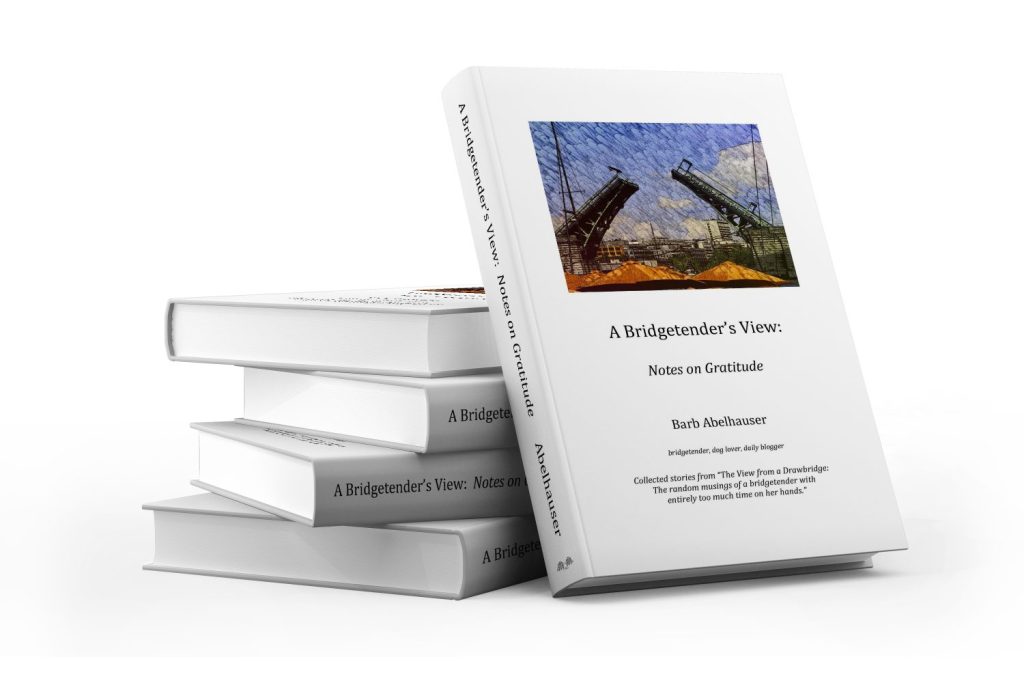
My book would make for great reading on the plane. Just sayin’. http://amzn.to/2mlPVh5


Leave a Reply