This first section is a brief explanation of my Italy blog posts, which were inspired by my 2-week trip to Italy in May, 2025. Feel free to skip this section if you’ve read it before.
Dear Reader, If you read my Italy posts in the order in which they’ve come out, it may seem as though we hopped back and forth all over the country, but I have decided not to write these posts sequentially. I want to write about the things that interest me most, as the spirit moves me. For some topics, I may even combine cities. I hope that by doing so, you’ll find it a lot more interesting than if I just give you a tedious day by day description of our itinerary, as if I were your Aunt Mabel forcing you to sit down and watch all her Super 8 films of the family road trip to Niagara Falls from 1966.
If you have any questions, comments or suggestions about how I’m approaching this travelogue-within-a-blog, please let me know in the comments below!
Anyone who knows me well will tell you that I’m a planner. I hate surprises. I don’t even like to come home without first knowing if Dear Husband will be there or not. That has nothing to do with any requirements I have tried to impose upon him. He’s a big boy and can do what he pleases. It’s simply that I feel the need to know if I’m walking into an empty house or not. It’s not that either one is preferred, it’s just that I need to mentally prepare myself either way. It’s an autistic thing.
If you really want to see me rattled, do something that makes things in my world not go according to plan. One glitch in my morning routine can mess up my entire day. Yes, I know, you can’t control everything. Life is unpredictable. Stuff happens. But I am much happier when things happen the way I expect them to. Because of that, I try to plan for as many contingencies as possible.
That’s why I nearly killed myself planning for this trip to Italy. Not only did I want things to run as smoothly as possible so that we could do as much as we could fit in in a place we’d probably never be able to return to, but also, this was to be Dear Husband’s first trip to Europe, and I wanted it to be amazing for him. Of course, there were plenty of SNAFUs along the way, and you’ll definitely be hearing about those in other posts, but I did move heaven and earth to try to avoid such problems.
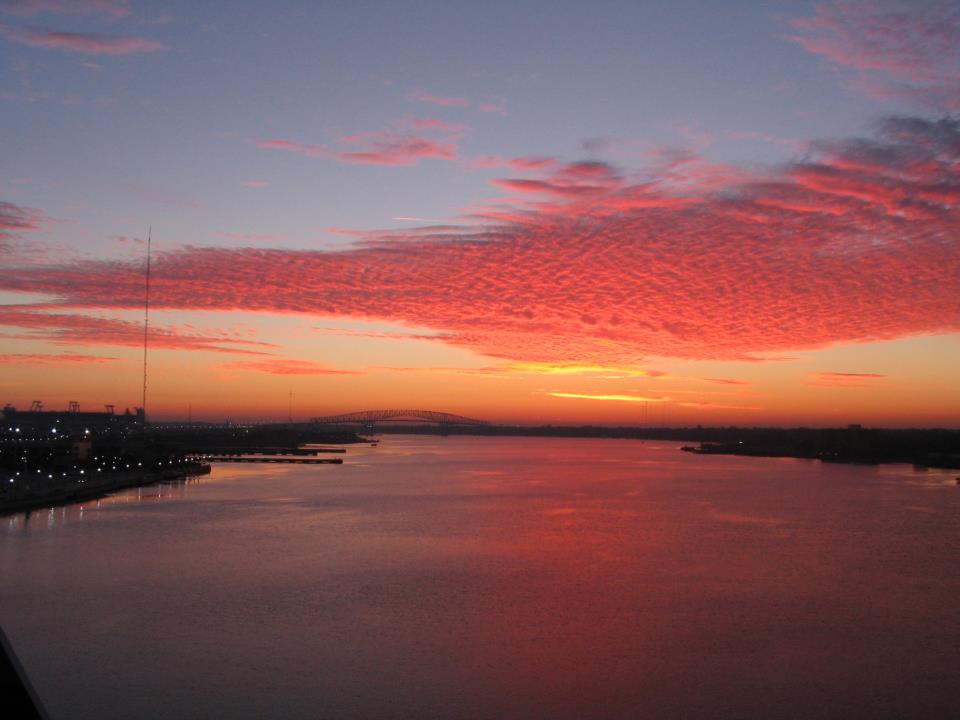
And then one gorgeous photo with a funny name made me rip a gaping hole in the center of our plans and redo several days of our itinerary at the last minute. Some things are worth the detour, and this was definitely one of those things. How could I pass up seeing a place called the Piano Grande, especially when it looks like this?

Piano Grande ticks all the boxes for me. Mountains. Nature. Peace and quiet. Not terribly far from the path we were planning to take, yet off the tourist trail. A vacation within our vacation. And best of all, it’s called Piano Grande, for cryin’ out loud.
Of all the phrases that I’ve picked up in Italian, “piano, piano” is by far my favorite. The instrument that naturally springs to mind for most English speakers is called a pianoforte in Italian. An exact translation of that would be “soft loud”, and they chose to call it that because a piano is capable of making both kinds of sounds. The earliest versions of a pianoforte were invented in Italy, in fact, in the 1700’s. You’ll never hear an Italian call a piano a piano, because that would be like calling it a “soft”, and that’s just wrong.
But the Italian word piano can be translated into English in many ways, depending upon the context and the part of speech. It can mean soft or softly, quiet or quietly, slow or slowly, gentle or gently, or it can mean flat or plain (as in a flat stretch of land) or plane (as in a mathematical plane), or plan (as in to make a plan). It also means floor (as in first floor, second floor). It can also be used as an admonishment to slow down. And if you say “piano, piano” it can mean slowly, slowly; softly, softly; take it easy; step by step; or little by little.
I just love that. The Italian word (and even more so the phrase), regardless of it’s meaning at any given moment, is endowed with the sort of personality that I would want to befriend. It imposes no pressure. It’s straightforward. It’s reassuring. It’s organized. It’s calming. Thanks, Italy! Piano, piano has officially become my emotional support phrase.
If asked, I would add another translation for piano, piano: Have patience. I had to say piano, piano to myself many times in Italy, when my Germanic sense of efficiency, logic, timing, and order was challenged. Guides would insist that we be early for tours and then be late themselves. Italians would cut in line with no remorse. Cogs in the corporate wheel would impose absurd requirements upon us. Logic was a vague notion, as were driving rules. I can’t even imagine what having to deal with governmental bureaucracy or the hospitals would be like. I do know most of our postcards have yet to arrive and it’s been over a month. At restaurants, our food never seemed to come out of the kitchen at the same time. Piano, piano.
So I wanted to be in piano. The more grande, the better. I had read that there was just a brief window of opportunity to see that riot of flowers, and it was usually late spring, early summer, and we’d be there in mid-May, so my hopes were not high. I chose to believe that any flowers we saw would be the cherry on top of the landscape sundae, and I let the planning begin.
I learned that in this case, Piano Grande does not mean Grand Piano (of course), but Great Plain, and it is, basically, a huge, high plateau that is about 4000 feet above sea level, in the Apennine Mountains, right in the middle of Monte Sibillini National Park. The only town on the plain is Castelluccio, which in pictures looks like a magical place that sits on a high rock and would make for a perfect dwelling for a princess and her friendly Disney dragon. When the sky is clear, I bet they can see a million stars at night. (In fact, some of the nighttime photos online are stunning.)

Unfortunately, there are no AirBnBs or hotels in Castelluccio. It has a population of less than 100, and I suspect most of those are farmers who work the fields of the plain (Piano! Does that make them pianists?) below. In fact, when we finally came upon the town itself, it sort of looked like a ghost town with a wide spot in the road for a café, a gelato shop, a much appreciated public bathroom, and some souvenirs. That was it. You don’t go to Castelluccio for Castelluccio. You go for a great view of Piano Grande.
To find lodging, we had to go further afield. I found an agriturismo in a small town called Preci, about 45 minutes away. (Agriturismos are basically farm resorts, sort of rehabbed farms that have been turned into bed and breakfasts. Often they’re quite luxurious.)
Sadly, the commune of Preci itself, founded in the 13th century, was largely destroyed in the earthquake of October, 2016, so it’s mostly closed off until it can be restored. But the shockingly affordable Agriturismo Rocca del Nera was far enough away to survive and thrive. I wish we could have stayed there for more than one night. In fact, I would have been content to stay for an entire week, provided I had sufficient books. It was so peaceful. There was birdsong even at 3 in the morning. They had a sauna, a hot tub, and an infinity pool. The views were spectacular. There were several friendly cats on the property, and our host was very kind. We miss him already. He made wonderful omelets.


That night in Preci was the most relaxing one on the trip. (But I don’t recommend the Ristorante Il Castoro. The place was beautiful, but the service was horrible, and we found the food to be disgusting.)
The next day we headed toward Castelluccio, and even the drive there was spectacular. At one point we stopped at one of the national park visitor centers, and a lady assumed that I spoke Italian. We were both gazing at the view, and I could tell that she was in as much awe as I was, and I could pick out words such as “marvelous” and “incredible” and so I just grinned widely and said, “Si… si…” She spoke some more, and then wandered away contentedly. She didn’t seem to ever figure out that I didn’t understand half of what she said. We shared a feeling, and that was enough. Onward.


And then… there it was. Stretched out before us. Piano Grande. As predicted, no flowers. But really, I mean, when it looks like this, does it really matter? And believe me, no words or photographs can do this place justice, so I won’t even try.


After we left Piano Grande, we drove past something I had read about, but hadn’t expected to see. It’s called the Bosco Italia. It’s on a hillside in the park. In 1961, pine tree seedlings were planted there to form the shape of Italy, and now they’re full grown and are quite striking to see.

En Route to our next stop, Sorrento, we had more gorgeous mountain views, but also some very sad ones. We drove through the town of Arquata del Tronto, which was destroyed by the same earthquake that damaged Preci in October, 2016. I came across this article from August, 2017 that described the residents as being very frustrated that the government had not kept their promises to rebuild their town, and here it was, May of 2025, and from what we saw, they still haven’t. It was like driving through a ghost town that had been devastated by war.


Speaking of war, as we got closer to Sorrento, we also passed the Abbey of Monte Cassino, which we could see on a hilltop in the distance. It gave me goosebumps, because the only thing I know about it is the Battle of Monte Cassino in World War II, a war that we fought (to grossly oversimplify) in order to stop fascism in Europe and militarism in Japan. The allies won the 4-month battle of Monte Cassino, but at what cost? 55,000 allies, 2,000 civilians, and 20,000 axis lost their lives. And now a fascist is in the White House, and he was elected by about half of the American population, many of whom are surely related to people who fought in WWII. Such a bitter pill to swallow.

This is exactly why fascists like to whitewash history and censor information. It’s why certain things are no longer allowed to be taught in our schools, why libraries have been targeted, and why tons of information has been deleted from governmental websites. If people really had access to information, and really understood the sins of the past, they’d be less willing to allow history to repeat itself. They’d be less apt to think the past was so freakin’ great, and so worth striving for that basic human rights should be trampled on to get there. The world has gone mad.
But this is intended to be a post about our trip to Italy, so I’ll take a deep, cleansing breath… There are so many unique things to see in that wonderful country. You could be there for 100 years and not see it all. But if you want to get away from the crowds, the pickpockets, the traffic, the constant pressure to buy things, and the faster pace, and would like to see a part of Italy that most tourists never get around to seeing, if you want a romantic getaway, or if you just want to relax and recharge, I highly recommend Piano Grande. It will wend its way into your heart… piano, piano.
Leave a Reply