This first section is a brief explanation of my Italy blog posts, which were inspired by my 2-week trip to Italy in May, 2025. Feel free to skip this section if you’ve read it before.
Dear Reader, If you read my Italy posts in the order in which they’ve come out, it may seem as though we hopped back and forth all over the country, but I have decided not to write these posts sequentially. I want to write about the things that interest me most, as the spirit moves me. For some topics, I may even combine cities. I hope that by doing so, you’ll find it a lot more interesting than if I just give you a tedious day by day description of our itinerary, as if I were your Aunt Mabel forcing you to sit down and watch all her Super 8 films of the family road trip to Niagara Falls from 1966.
If you have any questions, comments or suggestions about how I’m approaching this travelogue-within-a-blog, please let me know in the comments below!
We had tickets to see the Pantheon in Rome at 9 am on a Monday morning. The tickets said not to be even one minute late or we’d be turned away. Given the Italian sense of time, I found that rather hard to believe, but I didn’t want to risk it, because I’ve always wanted to see the Pantheon.
Unfortunately, Dear Husband’s sense of time seems quite Italian as well, despite his lack of Italian heritage. That’s a huge source of stress for me, so I came up with a way to make sure that we’d not only be on time, but would most likely be early. After the late evening we spent in Rome a few nights before, which I blogged about here, we had talked about wanting to see what an early morning would be like in the city as well. What did Rome look like when it first woke up, stretched, and began its day? What did it do before the tourists woke up?
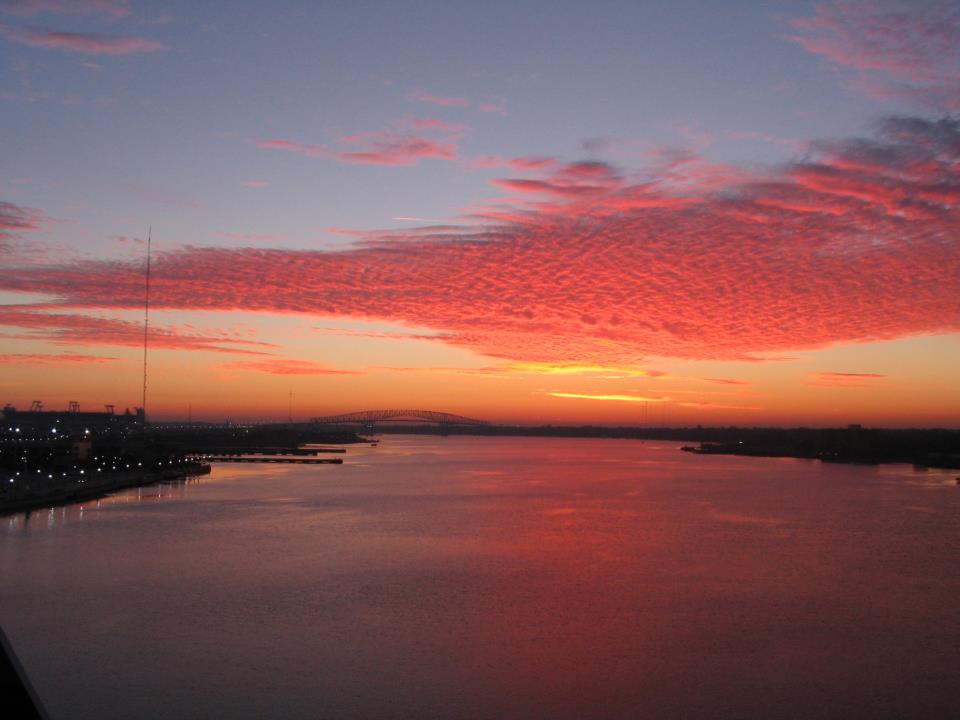
So we decided to get an early start and fit in some things in the Pantheon neighborhood that did not require tickets or even opening times. We got up at the ungodly hour of 6 am, because we wanted to take the metro into the historic center before the 7:30 rush hour kicked in. I’m definitely not a morning person, and DH is not a stick to the task at hand person, so I was rather proud of us when we managed to accomplish that goal. We actually got to see the sunrise from the balcony of our room.
(Incidentally, if you’re looking for an excellent little AirBnB for 2 for your stay in Rome, we highly recommend this one. It wasn’t in the historic district. In fact, it was west of the Vatican, but it’s really close to a metro stop, which is quite affordable to use if you get a 72 hour pass. It’s in a quiet, safe neighborhood, has an elevator and a lovely balcony, and the host, Riccardo, speaks English and was wonderful about answering questions. He even arranged in advance for a taxi to pick us up and take us to the airport on our last day. Just looking at the AirBnB photos on the web page is making me a little homesick.)

Our first stop was the Fountain of Trevi. We were stunned at the crowd even at that hour. I can’t imagine what it must be like at high noon.
There are many reasons to visit this fountain. Not only is it a gorgeous example of baroque architecture, but also it’s part of a long-standing tradition that goes back for centuries. It is said that if you throw a coin into this fountain, you’ll return to Rome. I’m all for that, even though it’s highly unlikely for me. There’s just too much to see in the world. Either way, it’s not a wasted effort, because the municipality collects the coins each night (usually around 3,000 euros), and the money is used to help the needy of Rome.
And like so much of this city, the fountain has its place in history. It took 30 years to build, and was completed in 1762. But there has been some sort of a fountain or other here since at least 19BC, because this was and is the terminus of an aqueduct called the Aqua Virgo. It used to supply the people of Rome with fresh water, but the present day fountain’s water isn’t for drinking, even though it puts out 80,000 cubic meters of water a day.
The primary sculpture in the fountain is that of Oceanus, God of all water, because Rome has always had a strong connection with water. (To this day you can get fresh, clean drinking water for free throughout the city.) And one of its two reliefs includes Agrippa, who is honored here because he was an ancient Roman general who contributed greatly to Rome’s water supply and its accompanying infrastructure, especially to the Aqua Virgo. (Agrippa was also the man who commissioned the original Pantheon.)


Right near the fountain is a restaurant called Antico Forno di Fontani di Trevi, where we indulged in a typical Italian breakfast, crème-filled cornettis. They’re basically sweetened croissants that you’ll see Italians grab and eat as they walk to work. I could never get used to the Italian breakfast because I’d miss my eggs and toast too much, and nothing but sweets in the morning is unappealing to me. DH enjoyed the whole espresso concept, though. I think he finds it to be a quick and efficient and delicious delivery of caffeine. It was a fun to experience an authentic Italian breakfast to go with our authentic Italian morning.

After eating our cornettis on the run, we made a quick visit to Galleria Sciarra’s Art Nouveau courtyard. I learned about this office building on the Atlas Obscura website. I’m sure most tourists overlook it. That must thrill the occupants, because it feels like a quiet refuge in an otherwise noisy city, but it really is a sight to see.
Galleria Sciarra was completed in 1888, when a unified Italy was still in its infancy. It was originally intended to be a shopping mall. The vivid frescoes that cover every inch of this 4-story courtyard celebrate the glorification of women. It depicts women in various parts of their lives (mostly domestic duties, because this was, after all, 1888, but it’s the thought that counts), and portrays their many virtues.
The courtyard is covered by an iron and glass skylight that allows the sun to brighten these frescoes. At night, they are lit up by warm, golden lighting. I wish I could have seen that.


Next, I was thrilled to visit one of the six talking statues of Rome—Il Facchino, the Fountain of the Porter. The talking statues were places where Romans could affix anonymous messages of protest and dissatisfaction, often satyric in nature, with the pope and the government, starting in the 1500’s, when citizens were traditionally not allowed to voice any type of dissent. (Even being caught copying down the messages on these statues or carrying one in your pocket could get you into a lot of trouble.)
The porter statue is doubly interesting because it depicts a trade that only existed for a short time in Roman history. As I discussed in an earlier post about Rome, there was a time when it was too dangerous to venture beyond Rome’s city walls to keep the aqueducts repaired, and so water became rather scarce. Therefore, men would collect water in barrels from the Tiber River and sell it from door to door. These men, called acquarolos, formed a guild of sorts, and that guild commissioned this statue in 1580.

As you can see from our photo, the statue’s face has been badly damaged. That’s because it had the misfortune of bearing an uncanny resemblance to Martin Luther, of Protestant Reformation fame. As one might imagine, he was not very popular with Roman Catholics in the 1500’s. People used to throw bricks at the statue’s face almost as often as they’d affix snarky messages to its base.
Our next stop was the delightful giant marble foot. I wrote about that in depth in my previous post, so I won’t recreate the wheel, or rather, the foot, here. So, let’s move on to the flood markers on the outside of the church of Santa Maria Sopra Minerva.

If you zoom in on these plaques from the 15th and 16th centuries, you’ll see some fascinating details of storm-tossed ships and fingers pointing to the exact waterline. The tallest one is more than 13 feet above the current street level, or almost 65 feet above sea level. That flood occurred in 1598, and was the most destructive one in Rome’s recorded history. The river’s embankments have been fortified since then, so hopefully a flood like that will never be seen again.
If, while gazing at these flood markers, you do an about-face, you’ll find yourself looking at yet another exceedingly strange thing: An Egyptian obelisk supported by an elephant. There are actually 13 Egyptian obelisks scattered across Rome, and they always seem out of place to me, but at certain points in their history, Rome was fascinated by Egyptian culture, and did not hesitate to help themselves to their monuments.
The obelisk we were looking at is the smallest one in Rome. It was originally erected in Egypt by the Pharaoh Apries in 580 BC. Somehow it made its way to Rome and was probably part of the Temple to Isis (the same one the marble foot most likely came from). The Church of Santa Maria Sopra Minerva had been built right over the top of that temple. This obelisk was rediscovered in 1665, buried in the Dominican cloister adjacent to the church.
In 1667, the elephant base was created for the obelisk, based on a 15th Century novel entitled “Poliphilo’s Dream of the Strife of Love” in which the main character meets an elephant made of stone carrying an obelisk. The illustration in the book is similar to the obelisk base we see today. The inscription on the base of the monument says, among other things, “A strong mind is needed to support a solid knowledge.”


As you can see in one of these obelisk photos, we were just a stone’s throw away from the backside of the Pantheon, and we still had some time to kill, so we decided go off script and take a peek inside the Church of Santa Maria Sopra Minerva itself. It turned out to be an excellent decision.
This church, which was built in 1370, is the only remaining example of an original Gothic church building in Rome. Most other Medieval churches were remodeled to such an extreme degree in the Renaissance period as to be unrecognizable. The exterior is more subdued than it once was, and yes, there has been interior remodeling over the years (the stained glass is mostly from the 19th century), but the interior, with its vaulted arches, is largely faithful to its Gothic origins.


This church played a significant role in Rome’s history. Several papal conclaves were held there, and during the Roman Inquisition, the main office was there as well. It was in this church that Galileo was forced to deny that the Earth revolves around the Sun.
To the left of the main altar, there is a statue called Cristo della Minerva, which was created by Michelangelo in 1521. The tombs of Medici Popes Leo X and Clement VII (the one who caused Michelangelo to go into hiding for months because he had ordered his death), and the tomb of Popes Paul IV and Urban VII (who was pope for only 12 days in 1590 before dying of malaria), can also be found inside.
It was a very pleasant morning ramble through Rome. The only crowds we encountered were at the Fountain of Trevi and the nearby restaurant. Even the metro ride had been relatively stress-free. That was about to change, however. When we rounded the corner to the front of the Pantheon, the lines were snaking all the way across the piazza, And mind you, our 9am slot was when the place first opened for the day.
“Don’t be late,” my fat Aunt Fanny.
Here’s a map of our route, from the Barberini Metro Station to the Pantheon. One nice, leisurely, early morning mile. Highly recommended.


Leave a Reply