
Let me preface this by saying that this should by no means be considered medical, therapeutic, or clinical advice of any kind. I have no training whatsoever in those fields. I’m just speaking from my personal experience and a bit of reading. If any of this post resonates with you, I beg you to seek the advice of a professional before making any life-changing health decisions, because, honestly, you shouldn’t take my word for anything. Who the hell am I?
There is nothing on earth that is more satisfying than that feeling when a major puzzle piece in your life, especially one you didn’t even realize was missing, falls into place. That happened to me a few minutes ago, and you, Dear Reader, were the first person I wanted to share that with. I’m so excited!
You see, my whole life, even as a small child, I have struggled on and off with bouts of deep, dark depression. Oooh, and here comes yet another epiphany. I don’t think I realized until this very second how much I had stigmatized myself because of that. I have always felt so helpless, so broken, so flawed, so out of control because of that constant struggle that I could never win. I felt like a passenger on the rollercoaster of my life. It was really horrible.
I used to beg my mother to let me go to therapy, and I don’t know if it was the expense, or if she thought I’d be taken away from her, or if she thought I was being a drama queen, or what it was, but she’d never let me do it. But the minute I turned 19 and had my own health insurance, I started going, and I have been going to one therapist or another for most of my adult life.
Because I knew something was off. I just didn’t know what. And yet none of those therapists spotted the autism. Not one.
I got misdiagnosed a lot. And because of that, a lot of the therapy did more harm than good. Because nothing “worked”, it often made me feel like a failure. What was WRONG with me???
There were several good therapists scattered in there who helped me with certain basic aspects of my personality, but the autism, the molten lava of this particular volcano, just got to continue to build up pressure under the surface, causing earthquakes, and steam, and toxic fumes, without being addressed at all. So the trauma accumulated.
And then I figured it out myself. And then I got evaluated and diagnosed. And then I found a therapist who understands autism.
It’s really important to be your own health advocate. You know your mind and body better than anyone else does. Don’t let anyone else decide what is trivial about your health, especially if you are a woman, as we are less likely to be taken seriously by people in the health professions. (Hysteria may have been removed as an official diagnosis from the DSM in 1980, but it is still firmly entrenched in many physician’s minds.) The work never ends for any of us, does it? Not in this life.
Here lately, I’ve been feeling really overwhelmed, though, and it’s been getting worse and worse and worse, to the point where I’m practically paralyzed. I can’t seem to do even the simplest tasks. Once I’m seated, the idea of going to get my phone when I’ve left it on the other side of the room often seems insurmountable, and the most ridiculous things make me cry. I have things I absolutely need to get done, and I can’t even get started. I can’t think straight, and I just know that all of this would be so much better if I could just get about a million hours of stress-free peace and quiet and much-needed rest. I’m exhausted to the very marrow of my bones. If only life had a pause button.
Ever since my diagnosis, I’ve been reading a lot about autism, and participating in a lot of Facebook groups related to adults who were diagnosed late in life, and watching YouTube videos by autistics for autistics, and I’ve learned a lot. And frankly, it’s a relief to feel, for the first time in my life, like I’m not alone.
I’ve heard people talk about autistic burnout, but I just kind of thought of it as depression while autistic. I thought, yeah, well, that stands to reason. Been there, done that. Sucks to be us. And I didn’t pay it any more attention. Until today.
I knew I was heading into another deep dark depression. I’ve felt this emotional death spiral before. But nowadays I have a lot more to lose. I used to be alone, so it didn’t really matter much. There was no collateral damage. But now I have a husband who gets hurt. He hates to see me like this, and he also is impacted by it. I want to save him from the feelings of helplessness and disappointment and irritation, so I feel obligated to hide it as much as I can, which adds an additional layer of pressure I never used to have.
When I was single, no one gave a shit if I only got out of bed to feed the dogs and go to work, you know. The dishes could pile up in the sink for a month. Nobody would know but me. No guilt, no shame. I knew I’d climb out of the hole and wash them eventually.
Now, more than ever, I felt like I had no one sympathetic to talk to about it. No one, really, who wasn’t going to tell me that I shouldn’t just snap out of it, stop being so negative, try harder, stop being such a sad sack. And that, of course, was making me feel a million times worse, because it’s bad enough feeling depressed without having people’s disapproval, as if I can’t even get depression right. So the pit that I was about to fall into seemed that much darker and that much deeper and I was clinging to the edge for dear life, and frankly, I was scared out of my ever-loving mind. I needed help.
Frankly I can’t remember what made me revisit autistic burnout at this moment in time. Such is the level of my brain fog. But I thought maybe my tribe might have some coping skills that I hadn’t considered before, because my old method of just hunkering down and riding it out until it passed was not optimal in my current living situation.
So I started reading. (Links below.) And that reading made me realize that autistic burnout and depression do have a lot of things in common, such as fatigue, problems concentrating, a sense of emptiness, becoming upset more easily, having trouble making decisions, solving problems, making plans, adapting to change, and managing emotions, wanting to withdraw from social interactions, and loss of appetite.
But, and this was the huge thunderbolt moment for me, they also have aspects that are very different. Autistic burnout comes with increased sensory stress, brain fog, and a loss of ability to mask. You often appear “more autistic” during burnout. You may be more prone to stimming, less verbal, less able to maintain eye contact, and experience a sharp decline in daily living skills.
A really interesting difference is that while depression often comes with suicidal ideation, autistic burnout comes with non-existence ideation. That’s a longing for demands to stop. A wish to sleep for a million years. Wanting to disappear, but not to die. A desire for relief, quiet, or escape. In other words, “Stop the world, I want to get off.” My God, can I often relate to that.
One of the most important differences between depression and autistic burnout is that of social withdrawal. In depression, the social withdrawal is usually maladaptive (harmful), whereas in autistic burnout, the social withdrawal can be adaptive (helpful). When I read that, Dear Reader, I wanted to leap up and scream in pure joy. Vindication! I knew it! I knew it! I knew it! I had been right all along.
First of all, these horrible cycles I’ve gone through my whole life haven’t been bouts of depression. (At least not a first. More on that below.) They have been autistic burnout. So my instinct to withdraw had been spot on. And the relentless pressure I got from family, friends, and loved ones to not withdraw at times like those always made things so much worse, and made me so upset and angry and made me feel so ashamed that I just couldn’t “get on with the business of living—I’d feel so much better!” that the whole experience would become akin to torture. I know everyone meant well, but they were doing the exact wrong thing. And my shouting, “Would you JUST LEAVE ME ALONE!!!” did not do much to persuade them to alter their strategy.
The reason social isolation is not maladaptive in autistic burnout is that autistic burnout is triggered for different reasons than depression. In short, when an autistic person’s demands outweigh their capacity to meet them for too long, burnout is bound to occur.
Autism requires constant energy management. Every interaction and sensory experience takes energy. Here are a few examples:
- Noise, light, movement, textures, unpredictability, all of that accumulates in your system.
- Contrary to popular belief, autistic people tend to experience emotions more intensely, and recover from stress more slowly, and that can be really overwhelming.
- Another huge energy suck is the constant need to mask so that you can fit in. That requires constant self-monitoring, performance, and inhibition. Am I giving enough eye contact? Am I using the right facial expressions? Am I laughing in all the right places? Am I socializing enough? Am I fidgeting? Am I talking too much or not enough? Am I over-sharing? There’s a lot of self-doubt and judgment as well.
- When tasks start to pile up, many autistic people become paralyzed, and the resulting shame can be unbearable.
- Dissociation can be a common way to cope (I know it’s one that I depend upon) but creating a whole inner world while remaining just aware enough to function in your surroundings requires a whole new level of energy resources.
- The increased stress means autistic people often have additional health issues such as digestive issues or migraines, and ironically, those stress induced health issues cause additional stress.
- People pleasing, for example, doing social things you really don’t want to do, or pretending to be outgoing or enthusiastic when you are not, in order to please someone else, can be emotionally taxing.
- Any change in routine is a massive depletion of energy. And the fact that most of the people around you cannot even come close to understanding what you are going through from one minute to the next is exhausting as well.
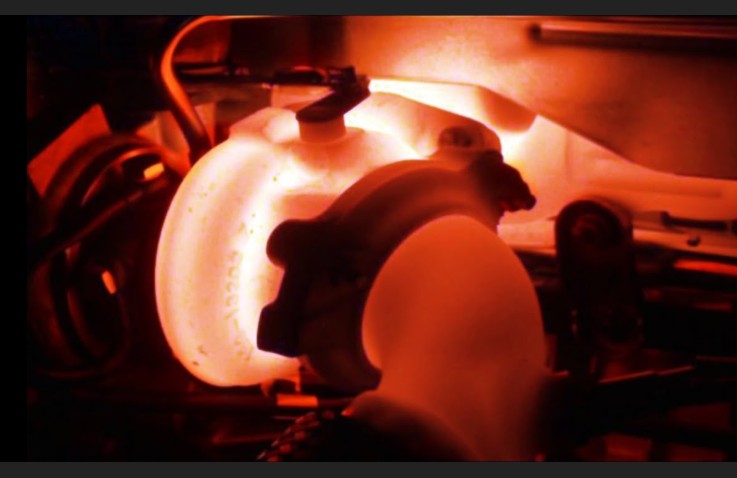
Is it any wonder we get burned out? If we were cars, our engines would be glowing cherry red. We’d be bursting into flames on the side of the highway.

The way to avoid autistic burnout is to respect your own limits. Don’t take on more than you can handle. Reduce your expectations if need be. Get assistance with daily tasks when possible. Set healthy boundaries. Don’t allow yourself to be pushed beyond those boundaries.
There is a great deal of pressure from neurotypical society to engage socially at a level that they find to be acceptable, but that may not be healthy for you. Unfortunately, your resistance to that pressure will also take its toll on you every day. Most neurotypicals are not likely to become enlightened in our lifetimes, so you will have to set aside energy for that as well. Their strange unspoken rule is that if your happiness makes them uncomfortable, then you must be made uncomfortable as well, by being forced to conform, and if you don’t comply, then the penalty is some combination of judgment, microaggression, ostracism, rejection, derision, and/or isolation.
Therefore, social isolation during autistic burnout is not an avoidance behavior as it is in depression. It is one way autistic people give themselves the time and space to decompress from all the sensory overload. It is a way to heal. It is a way to regain the energy that they need to do the things that bring them joy.
I now believe that a lot of the times in my life when I thought I was suffering from depression, which I view as state over which I have far less control, I was actually in autistic burnout, which I’m starting to think I might be able to nip in the bud as I get a stronger sense of what drains my energy. I need to fully understand just how much energy I have to give, and learn more assertive ways of standing up to the pressures of neurotypical society. If I get a handle on those things, I will become less overwhelmed, and less prone to burnout.
And that is an excellent thing, because burnout, unchecked, will most definitely lead to depression. I see that now. Because the longer I’m in burnout, with its symptoms of exhaustion and brain fog and an inability to get things done, the harder I am on myself, and the harder other people are on me. And then I start feeling inadequate and worthless, and that’s when I enter the land of depression. And by then, the only way out of that bleak hellscape is through.
Has my frustration with my struggles with autistic burnout and the way people react to those struggles led to some depression? God, yes. Will I continue to take anti-depressants because of that? God, yes. But do I feel as though I might have a few more weapons in my arsenal to battle this trickster demon I’ve been fighting the wrong way my entire life?
You bet your sweet Xena, I do! And it feels good. I no longer feel helpless. With practice and persistence, I can actually take steps to ward it off.

You might want to step aside. Barb’s got some new battle tactics, and she’s comin’ through, Dear Reader. Bring it on!
Sources:
Autistic Burnout vs. Depression: How to Tell the Difference and Why It Matter (sic)
Understanding autistic burnout
BUCKETS FOR BRAINS (A COMIC ABOUT BURNOUT & CONGNITIVE LOAD)

Leave a Reply