
My husband is constantly amazed that I know the lyrics of many of the songs that pop up when we’re watching movies or TV shows. Yes, we have the captions on, but when he looks over at me, I’m not looking at them. I’m more likely looking at my phone, playing some game. I can do this with a lot of the old standards from the first half of the 20th century, if they showed up on Broadway or in Hollywood or popped out of Tin Pan Alley. If they were show tunes, popular songs, or jazz standards, I can usually sing along.
I owe this to my mother. When we were desperately poor, she and I would sit in our tent, or later on, in her travel trailer, or in the house my sister bought her, and open up this huge 3-ring binder that was published by Reader’s Digest. It had all this sheet music from the Great American Songbook, and we’d sing. (We wouldn’t sing well, mind you, but we’d sing.)
I think we did this because we couldn’t afford to do anything else, and being stuck in the Florida school system, I usually had either done most of my homework in the class itself or on the bus on the way home, and even though we didn’t know I was autistic, she knew something was up, and the singing comforted me and distracted me, and also, my mother absolutely loved to sing. And so sing we did. She’d pick one, then I’d pick one. And if I wasn’t familiar with one, she’d show me how it sounded, and if we both didn’t know, we’d figure it out from the sheet music.
We’d sing anything from Irving Berlin to Johnny Mercer to Rodgers and Hammerstein to Cole Porter to George Gershwin. And as we sang, I could sometimes imagine Frank Sinatra or Nat King Cole or Ella Fitzgerald or Judy Garland sitting right next to us, singing along. It was magical.
Not that I could have ever told you the names of the people or the composers or even the song titles most of the time. I still can’t. Because, as most good teachers already know, to truly learn something, you first have to either feel that it is important, or you have to feel that it’s fun and/or interesting. And on my particular spot on the Autism Spectrum, I have a very narrow window of what is either important or fun and/or interesting, and those things get the bulk of my attention. The singing with my mother, and thus the lyrics, were the fun part for me. I didn’t care about the people’s names or the song titles.
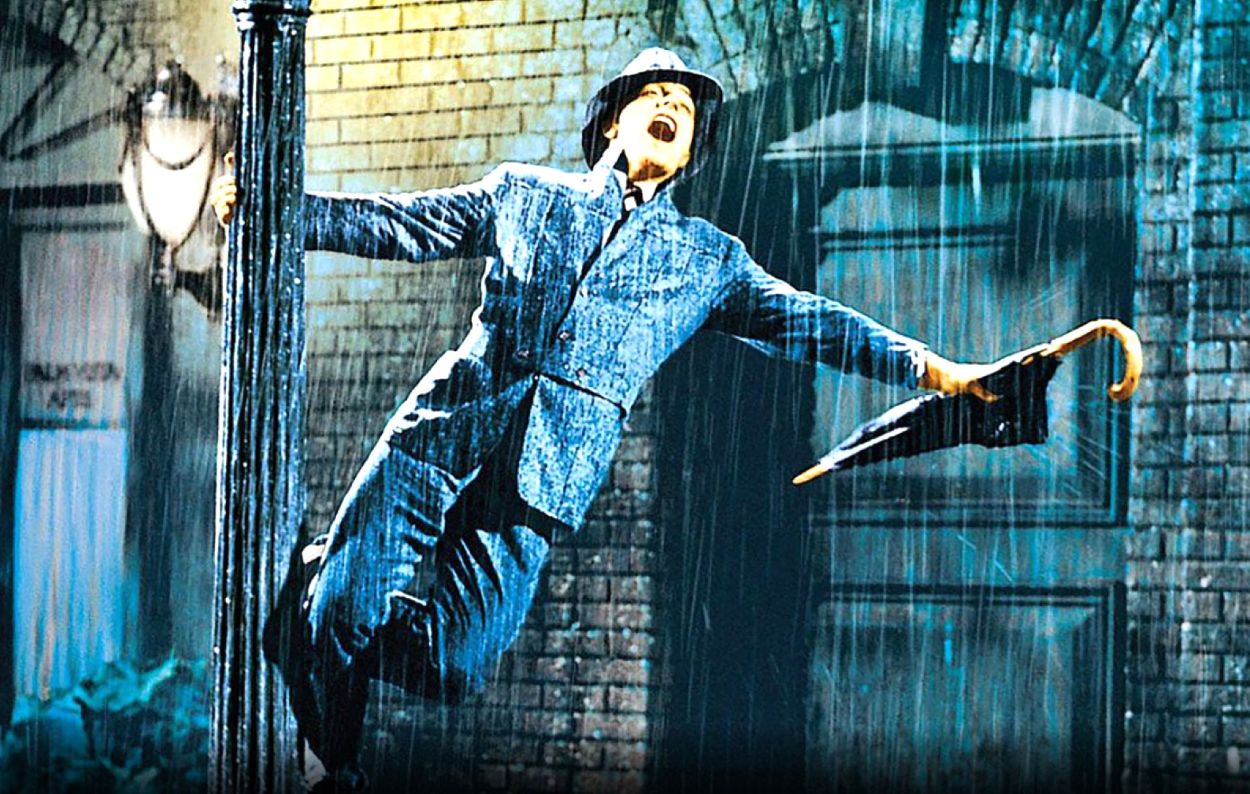
Now, if my life depended on knowing that information, I’d be an expert. But it didn’t, and it doesn’t, so if you ask me who sang what, and when, and in what movie? Well, I know Singin’ in the Rain was in Singin’ in the Rain, and it was sung by Gene what’shisface, but that’s all I can tell you. Kelly! That’s his name. (I edited that in a few days later.)
That’s probably also why I never became a sports fan. Most of the sports fans I know are heavily into the statistics of a game, and I couldn’t care less about that stuff. Given time and understanding, I might enjoy the experience of one sport or another. But even then, I would never care who was making the playoffs or whatever, or which team was most likely to win.
In the Olympics, I’m more interested in the human-interest stories, and the events that are pretty and entertaining. I love the ice skating and the gymnastics and the synchronized swimming. I don’t really care what countries they’re from. I love the opening and closing events. The rest is kind of… meh.
So yeah. I genuinely believe that anyone is capable of learning anything, as long as they feel that it’s important or fun or interesting. The worst mistake school systems make is couching various subjects in the guise of, “Yeah, math sucks, but you have to do it whether you like it or not.” I genuinely believe that’s why so many people struggle with the subject. Surely, there must be some way to make math interesting or fun. I know I did much better in Geometry because I could visualize it, and sometimes we had actual 3-dimensional projects. Now that I could get into.
I really wish I had had a science teacher who had made science interesting for me in high school. Science fascinates me now. I think if I had truly understood how fascinating it was back then, I’d have taken an entirely different career path. But no. It was just another class with a big, heavy, intimidating textbook and an uninspiring educator who wanted to be somewhere else just about as much as we did. What a missed opportunity.
Wow, can I go off on a tangent, or what?
Back to the Great American Songbook. For decades, I thought that 3-ring binder songbook that the Reader’s Digest put out was the Great American Songbook, and I treated it with great reverence. Indeed, all the songs in it were part of the Great American Songbook canon, but the Great American Songbook itself (which I shall refer to as the GAS from here on out to save my typing fingers) is, much to even my surprise, not even a book.
Not only is it not a book, but no one can even tell you for sure how many songs are in the canon. (This is why I love this blog so much. The research I do has taught me so much!) The GAS has its own Foundation, and they’re even a bit wishy-washy as to the timespan in which these great American classics came out. It definitely covers the 1920’s through the 1950’s, but it could be as early as 1900 and as late as the 1960’s.
And, because so many artists are reviving these old standards today, such as Harry Connick, Jr., Michael Bublé, and Diana Krall, they are considered to be singers in said canon, despite being contemporary singers. So is Lady Gaga, for having partnered with Toney Bennett in two albums, Cheek to Cheek, and Love For Sale. So as you can see, the GAS is ever-expanding. (Sorry. Had to.)
I urge you to check out the foundation’s website. It’s really interesting. The building itself is in Carmel, Indiana, and it appears to have several exhibits, as well as a library and extensive archives which you can explore online. It also has a summer Songbook Academy for high school students, and a Hall of Fame.
So, my mother gave me a love of music for the first half of the 20th century, and my sisters took care of the 60’s through the 80’s, and I had a smattering of alternative music interest due to my Deejay boyfriend during that era, but after that, I sort of dropped off a musical cliff for some reason. I couldn’t name or recognize a single Taylor Swift song. Maybe I needed the companionship factor to keep me interested. I don’t know.
Music did grab me for much of my life, though, Maybe it would have loomed even larger if I had had a decent singing voice. Or maybe it would have had a firmer hold on me if I had had any talent with a musical instrument (And believe me, I tried a time or two. Either I wasn’t interested, or I just couldn’t get it.) But play an old standard, baby, and you will definitely have my attention!
Those old songs take me back to a moment in time when I felt like someone cared about me for who I was, wasn’t criticizing me or bullying me or telling me I needed to change. It was a rare occasion when someone was choosing me first and wanted me to feel safe and like I was worthy of spending time with. Like I was enough, without having to fill the space with everything and everyone else, you know? Like spending time with only me wasn’t a sacrifice. Like, in fact, it was fun.
There were other things my mother got terribly wrong, but that was one thing she really got right. I wish I could tell her how much those moments meant. I wonder what happened to that book. I sure wish I still had it.
Hearing those songs is a balm to my spirit. That’s why two of my favorite movies are When Harry Met Sally and Home for the Holidays. Classic songs are almost additional characters in those movies. I’ll add YouTube videos from each of them here.
In the meantime, Dear Reader, grab your coat and snatch your hat, leave your worries on the doorstep. Just direct your feet to the sunny side of the street!
Additional sources:

Leave a Reply